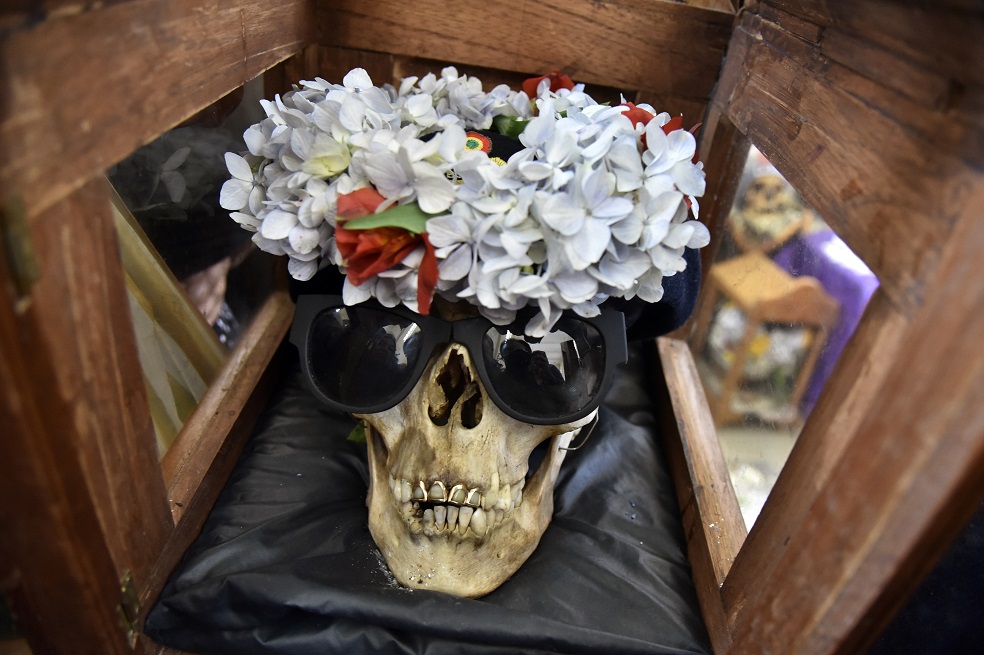
View of a decorated human skull during the Natitas Festival at the cemetery of La Paz on November 8, 2018. – The festival is a macabre ritual in which human skulls (natitas) are taken to La Paz cemetery to be venerated each Novembber 8 by thousands of Bolivians. Believers keep the "natitas" at their homes, which according to the Andean tradition, protect their families. (Photo by AIZAR RALDES / AFP)
Foto: AFP - AIZAR RALDES
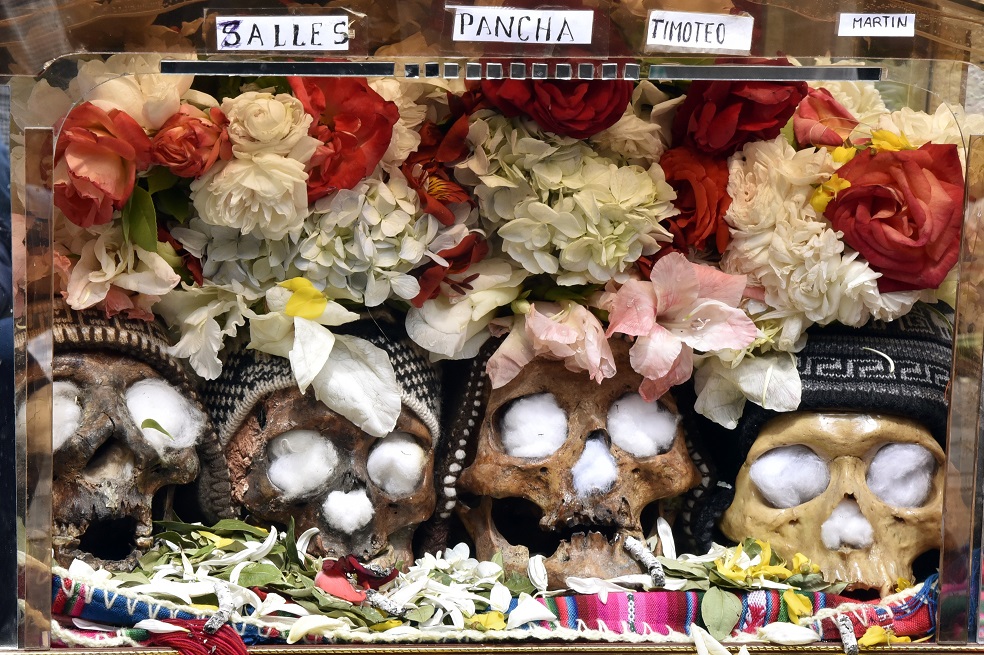
View of human skulls during the Natitas Festival at the cemetery of La Paz on November 8, 2018. – The festival is a macabre ritual in which human skulls (natitas) are taken to La Paz cemetery to be venerated each Novembber 8 by thousands of Bolivians. Believers keep the "natitas" at their homes, which according to the Andean tradition, protect their families. (Photo by AIZAR RALDES / AFP)
Foto: AFP - AIZAR RALDES
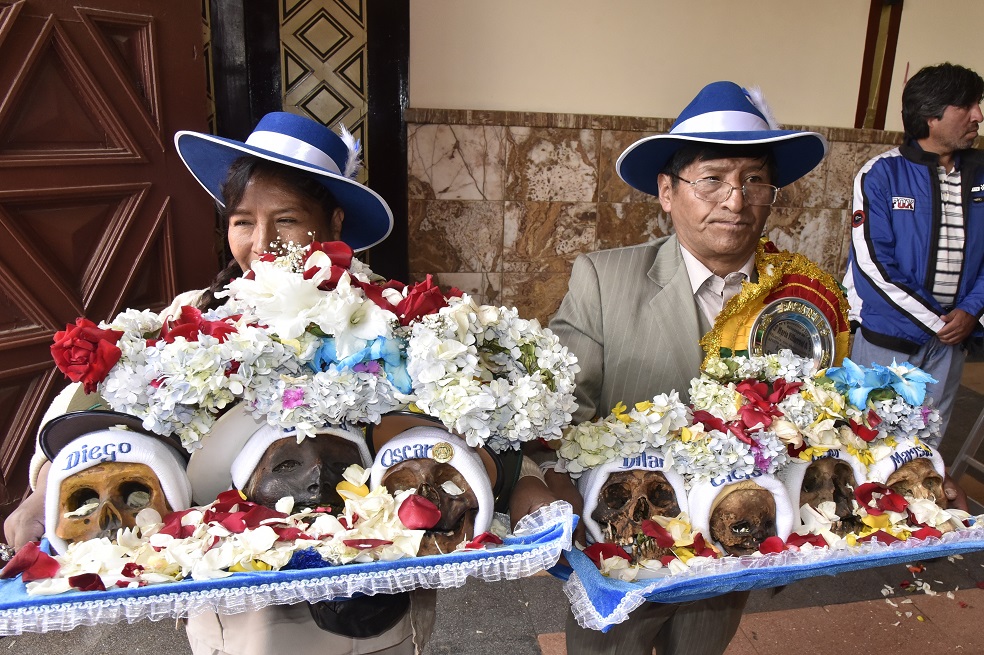
A couple carrying human skulls arrives at the cemetery of La Paz during the Natitas Festival on November 8, 2018. – The festival is a macabre ritual in which human skulls (natitas) are taken to La Paz cemetery to be venerated each Novembber 8 by thousands of Bolivians. Believers keep the "natitas" at their homes, which according to the Andean tradition, protect their families. (Photo by AIZAR RALDES / AFP)
Foto: AFP - AIZAR RALDES
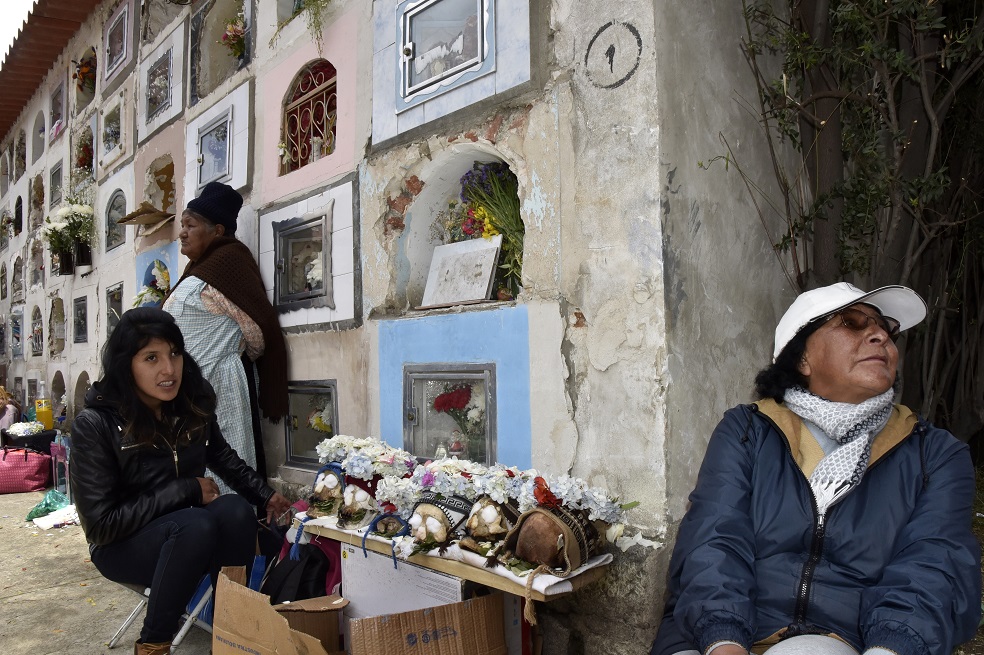
Aymara indigenous women worship human skulls during the Natitas Festival at the cemetery of La Paz on November 8, 2018. – The festival is a macabre ritual in which human skulls (natitas) are taken to La Paz cemetery to be venerated each Novembber 8 by thousands of Bolivians. Believers keep the "natitas" at their homes, which according to the Andean tradition, protect their families. (Photo by AIZAR RALDES / AFP)
Foto: AFP - AIZAR RALDES
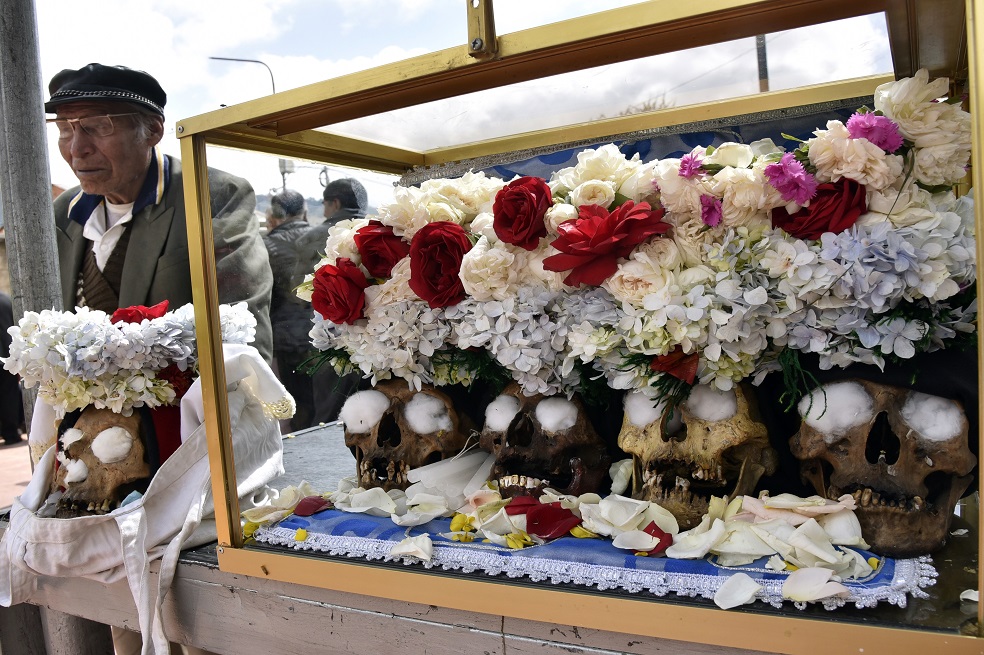
View of human skulls during the Natitas Festival at the cemetery of La Paz on November 8, 2018. – The festival is a macabre ritual in which human skulls (natitas) are taken to La Paz cemetery to be venerated each Novembber 8 by thousands of Bolivians. Believers keep the "natitas" at their homes, which according to the Andean tradition, protect their families. (Photo by AIZAR RALDES / AFP)
Foto: AFP - AIZAR RALDES
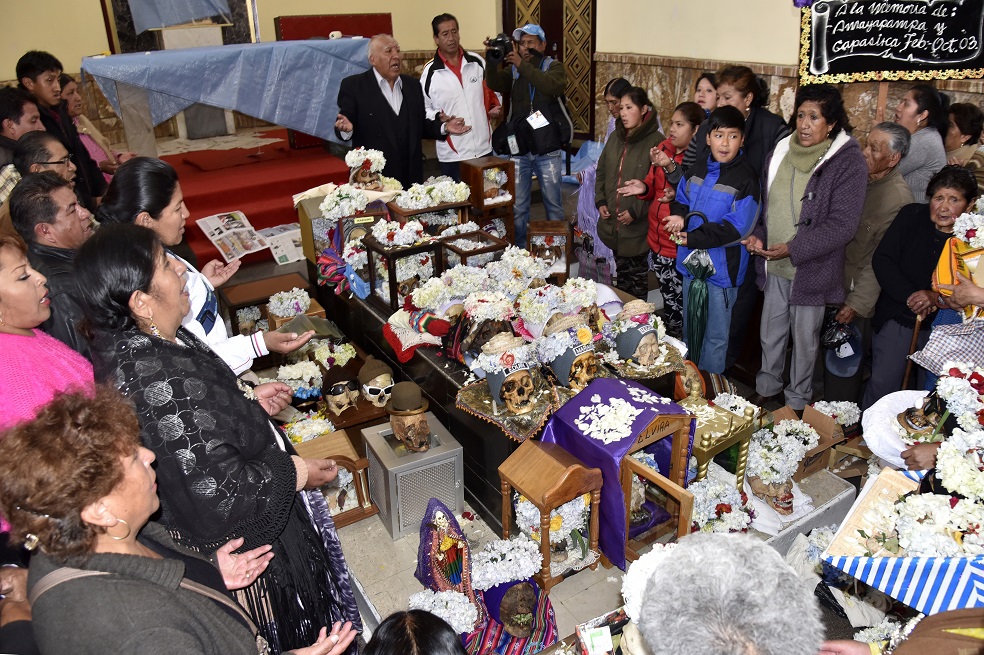
Devotees worship human skulls during the Natitas Festival at the cemetery of La Paz on November 8, 2018. – The festival is a macabre ritual in which human skulls (natitas) are taken to La Paz cemetery to be venerated each Novembber 8 by thousands of Bolivians. Believers keep the "natitas" at their homes, which according to the Andean tradition, protect their families. (Photo by AIZAR RALDES / AFP)
Foto: AFP - AIZAR RALDES
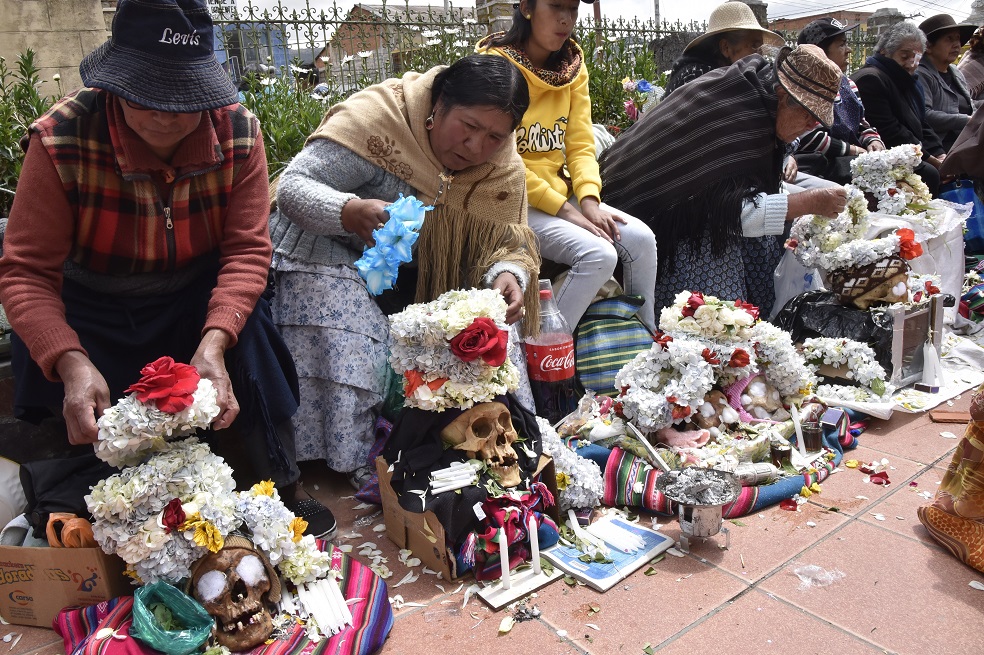
Aymara indigenous women worship human skulls during the Natitas Festival at the cemetery of La Paz on November 8, 2018. – The festival is a macabre ritual in which human skulls (natitas) are taken to La Paz cemetery to be venerated each Novembber 8 by thousands of Bolivians. Believers keep the "natitas" at their homes, which according to the Andean tradition, protect their families. (Photo by AIZAR RALDES / AFP)
Foto: AFP - AIZAR RALDES
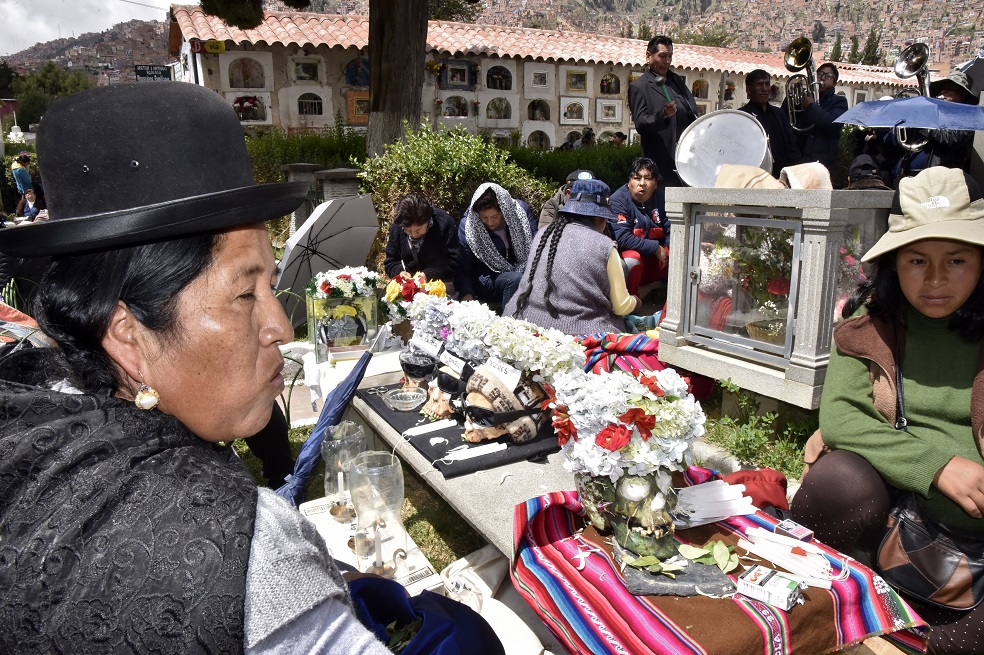
Aymara indigenous women worship human skulls during the Natitas Festival at the cemetery of La Paz on November 8, 2018. – The festival is a macabre ritual in which human skulls (natitas) are taken to La Paz cemetery to be venerated each Novembber 8 by thousands of Bolivians. Believers keep the "natitas" at their homes, which according to the Andean tradition, protect their families. (Photo by AIZAR RALDES / AFP)
Foto: AFP - AIZAR RALDES
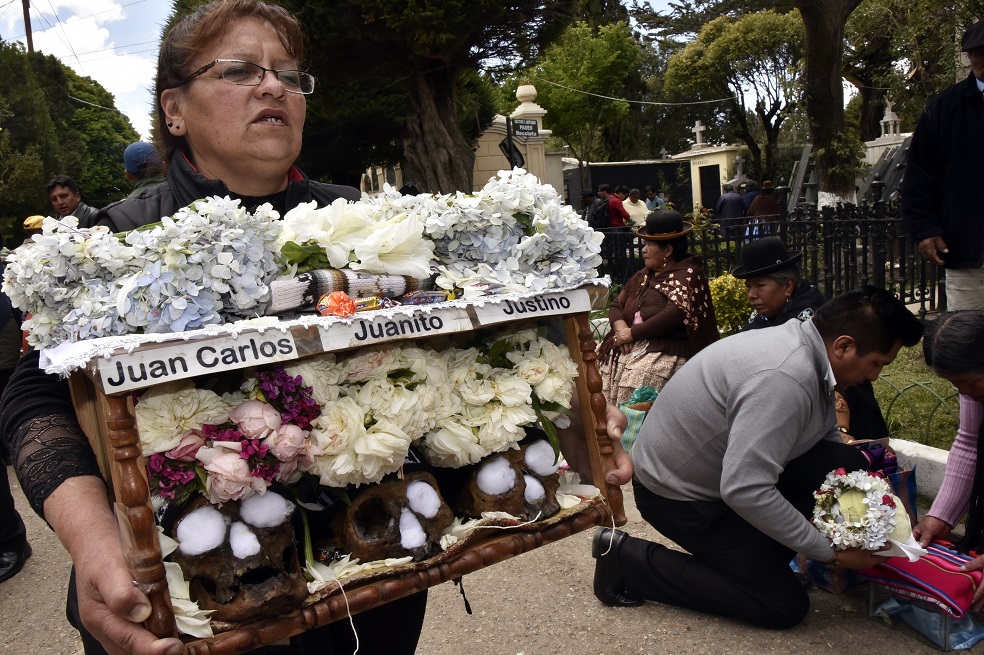
A woman carrying human skulls arrives at the cemetery of La Paz during the Natitas Festival on November 8, 2018. – The festival is a macabre ritual in which human skulls (natitas) are taken to La Paz cemetery to be venerated each Novembber 8 by thousands of Bolivians. Believers keep the "natitas" at their homes, which according to the Andean tradition, protect their families. (Photo by AIZAR RALDES / AFP)
Foto: AFP - AIZAR RALDES

 Conoce más
Comentarios
Sin comentarios aún. Suscríbete e inicia la conversación