This picture taken on April 15, 2014 shows the moon during a total lunar eclipse over the Juscelino Kubitschek Memorial in Brasilia. The entire event was to be visible from North and South America, but sky watchers in northern and and eastern Europe, eastern Africa, the Middle East and Central Asia were out of luck, according to US space agency NASA. AFP PHOTO/Evaristo SA
Foto: AFP - EVARISTO SA
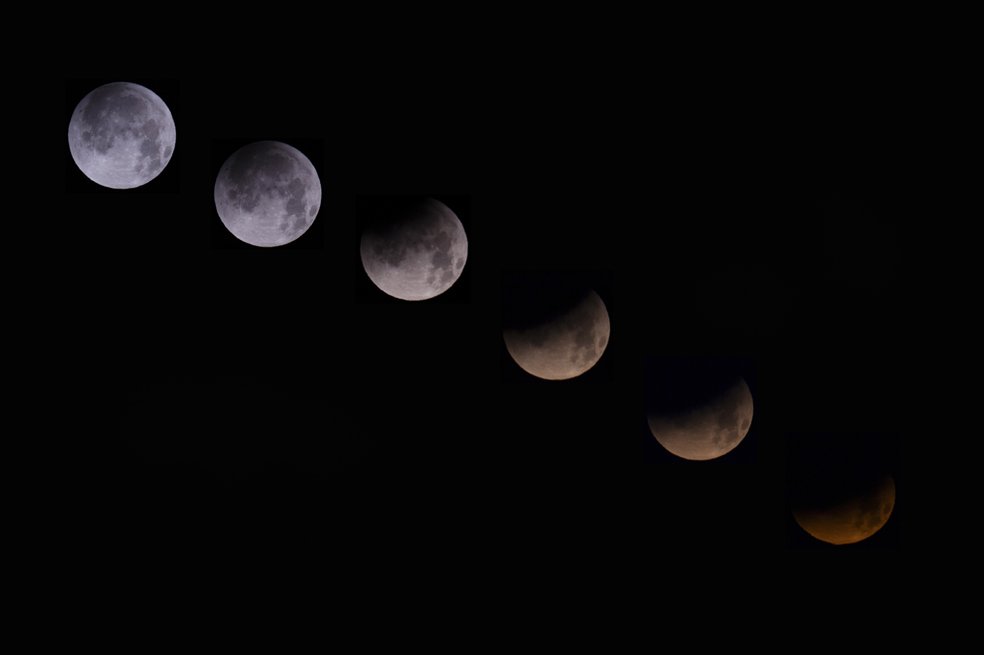
A combination of 6 pictures shows the moon in different stages of a total lunar eclipse seen from the Spanish Canary island of Tenerife on April 15, 2014. People in most of north and south America should be able to witness this year's first total lunar eclipse, which will cause a "blood moon" and is the first of four in a rare Tetrad of eclipses over the next two years. AFP PHOTO/ DESIREE MARTIN
Foto: AFP - DESIREE MARTIN

The moon is seen as it emerges from a total lunar eclipse from the Spanish Canary island of Tenerife on April 15, 2014. People in most of north and south America should be able to witness this year's first total lunar eclipse, which will cause a "blood moon" and is the first of four in a rare Tetrad of eclipses over the next two years. AFP PHOTO/ DESIREE MARTIN
Foto: AFP - DESIREE MARTIN

The moon is seen during a total lunar eclipse from the Spanish Canary island of Tenerife on April 15, 2014. People in most of north and south America should be able to witness this year's first total lunar eclipse, which will cause a "blood moon" and is the first of four in a rare Tetrad of eclipses over the next two years. AFP PHOTO/ DESIREE MARTIN
Foto: AFP - DESIREE MARTIN
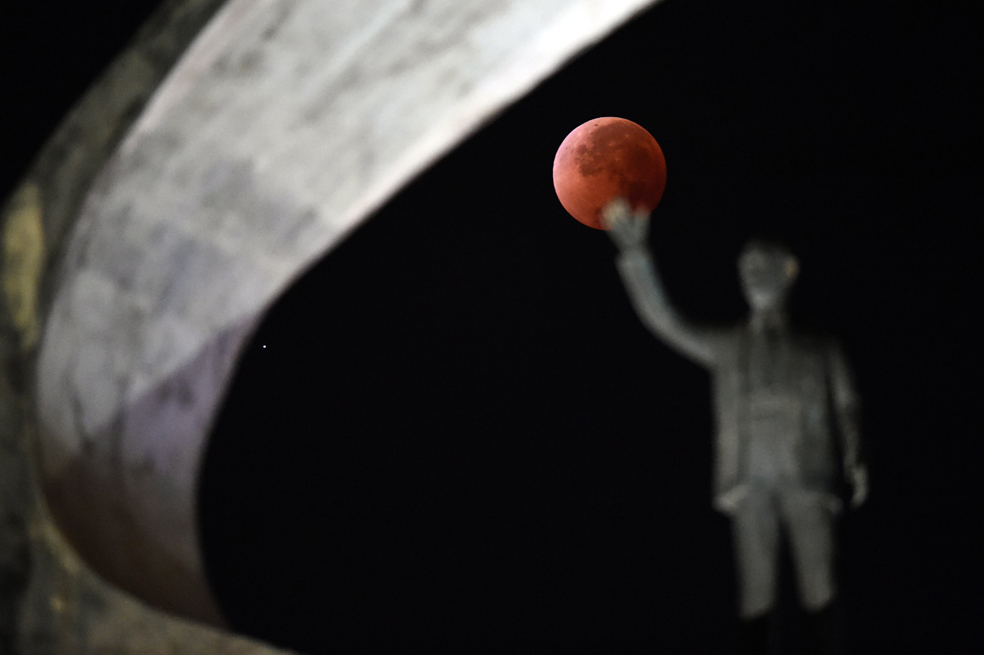
This picture taken on April 15, 2014 shows the moon during a total lunar eclipse over the Juscelino Kubitschek Memorial in Brasilia. The entire event was to be visible from North and South America, but sky watchers in northern and and eastern Europe, eastern Africa, the Middle East and Central Asia were out of luck, according to US space agency NASA. AFP PHOTO/Evaristo SA
Foto: AFP - EVARISTO SA

The blue star Spica (R) is seen next to a total eclipse of the moon (L) underway over southern California as seen from the San Gabriel Valley, east of downtown Los Angeles early on April 15, 2014. The entire event was to be visible from North and South America, but sky watchers in northern and and eastern Europe, eastern Africa, the Middle East and Central Asia were out of luck, according to NASA. AFP PHOTO / Frederic J. BROWN
Foto: AFP - FREDERIC J. BROWN

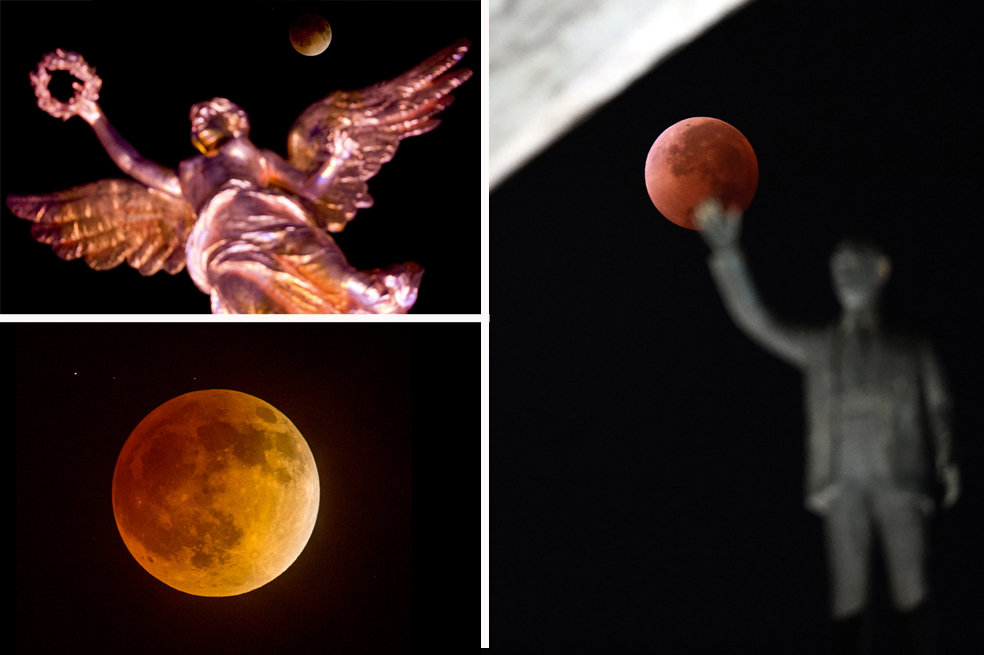
The moon is pictured over the El Salvador del Mundo Monument in San Salvador, El Salvador on April 15, 2014 as a lunar eclipse begins across the Americas. The entire event was to be visible from North and South America, but sky watchers in northern and and eastern Europe, eastern Africa, the Middle East and Central Asia were out of luck, according to US space agency NASA. AFP PHOTO/ Jose CABEZAS
Foto: AFP - JOSE CABEZAS

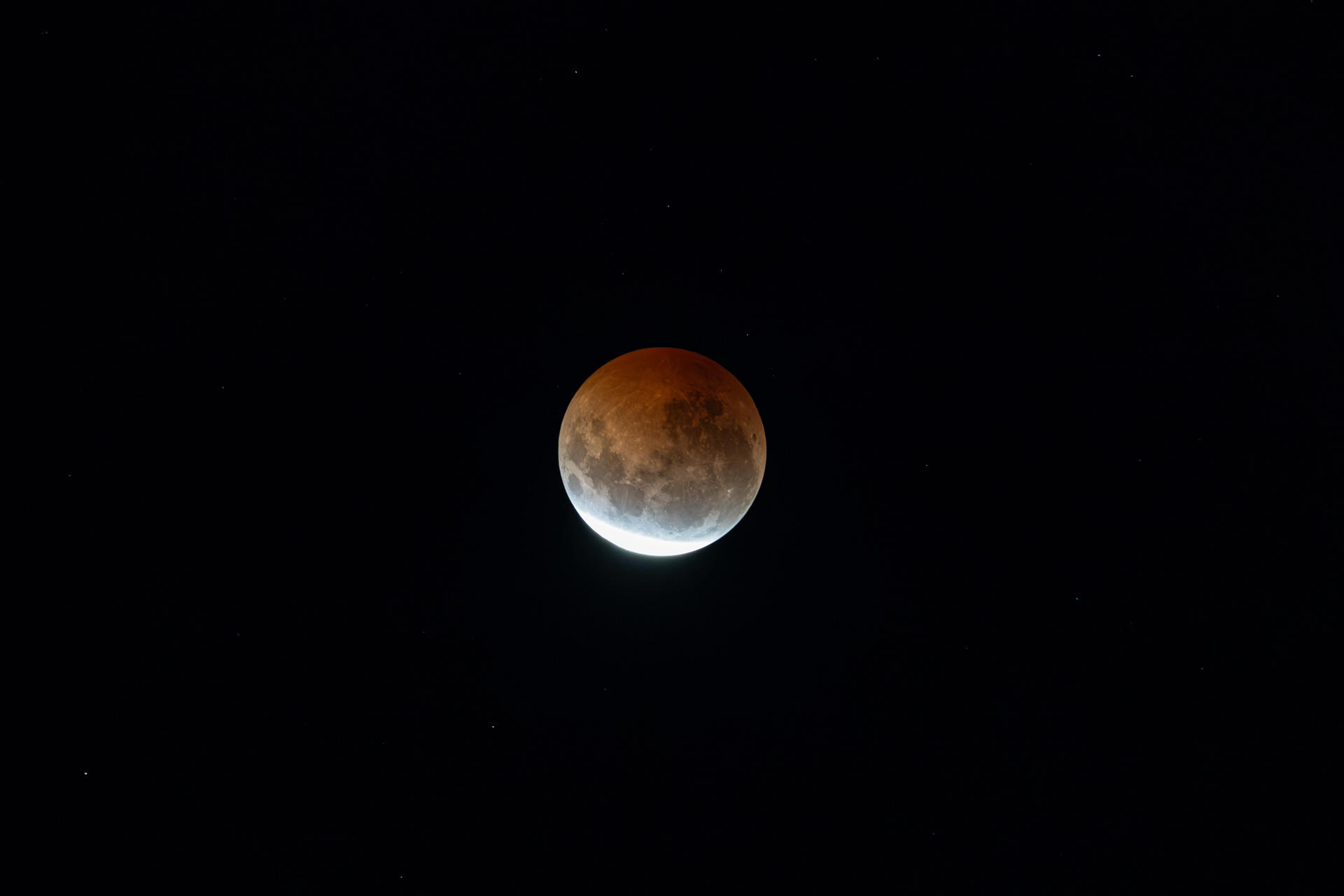
The moon is seen during the early stages of a total lunar eclipse over the Honduras city of Tegucigalpa early on April 15, 2014. The entire event was to be visible from North and South America, but sky watchers in northern and and eastern Europe, eastern Africa, the Middle East and Central Asia were out of luck, according to US space agency NASA. AFP PHOTO / Orlando SIERRA
Foto: AFP - ORLANDO SIERRA
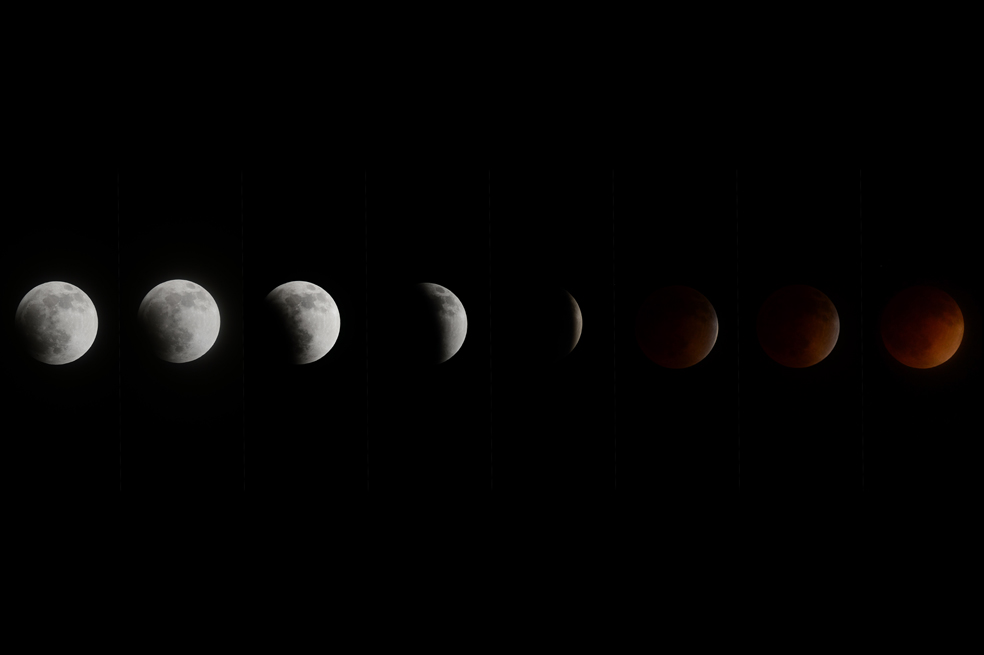
This combo shows a lunar eclipse beginning over southern California and turning into a red moon as seen from the San Gabriel Valley, east of downtown Los Angeles early on April 15, 2014. The entire event was to be visible from North and South America, but sky watchers in northern and and eastern Europe, eastern Africa, the Middle East and Central Asia were out of luck, according to NASA. AFP PHOTO / Frederic J. BROWN
Foto: AFP - FREDERIC J. BROWN

The moon is halfway through a lunar eclipse over southern California as seen from Korea town, west of downtown Los Angeles early on April 15, 2014. The entire event was to be visible from North and South America, but sky watchers in northern and and eastern Europe, eastern Africa, the Middle East and Central Asia were out of luck, according to NASA. AFP PHOTO/JOE KLAMAR
Foto: AFP - JOE KLAMAR

The moon is pictured over the El Salvador del Mundo Monument in San Salvador, El Salvador on April 15, 2014 as a lunar eclipse begins across the Americas. The entire event was to be visible from North and South America, but sky watchers in northern and and eastern Europe, eastern Africa, the Middle East and Central Asia were out of luck, according to US space agency NASA. AFP PHOTO/ Jose CABEZAS
Foto: AFP - JOSE CABEZAS
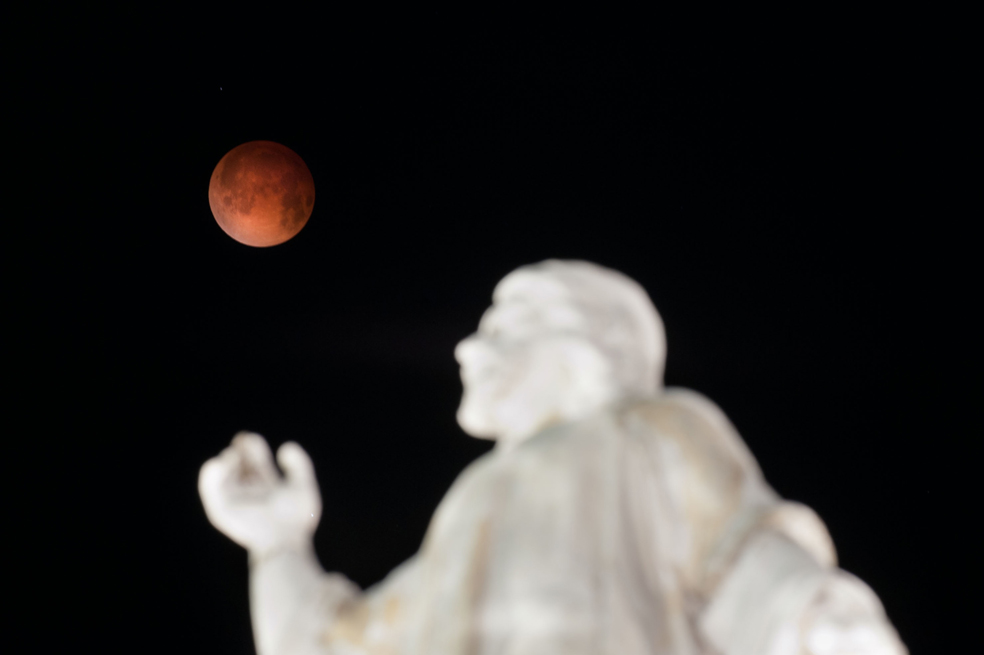
The moon is pictured over the El Salvador del Mundo Monument in San Salvador, El Salvador on April 15, 2014 as a lunar eclipse begins across the Americas. The entire event was to be visible from North and South America, but sky watchers in northern and and eastern Europe, eastern Africa, the Middle East and Central Asia were out of luck, according to US space agency NASA. AFP PHOTO/ Jose CABEZAS
Foto: AFP - JOSE CABEZAS

A total eclipse of the moon underway over southern California as seen from Korea town west of downtown Los Angeles early on April 15, 2014. The entire event was to be visible from North and South America, but sky watchers in northern and and eastern Europe, eastern Africa, the Middle East and Central Asia were out of luck, according to NASA.AFP PHOTO/JOE KLAMAR
Foto: AFP - JOE KLAMAR

Total eclipse of the moon underway over southern California as seen from Korea town ,west of downtown Los Angeles ,early on April 15, 2014. The entire event was to be visible from North and South America, but sky watchers in northern and and eastern Europe, eastern Africa, the Middle East and Central Asia were out of luck, according to NASA.AFP PHOTO/JOE KLAMAR
Foto: AFP - JOE KLAMAR
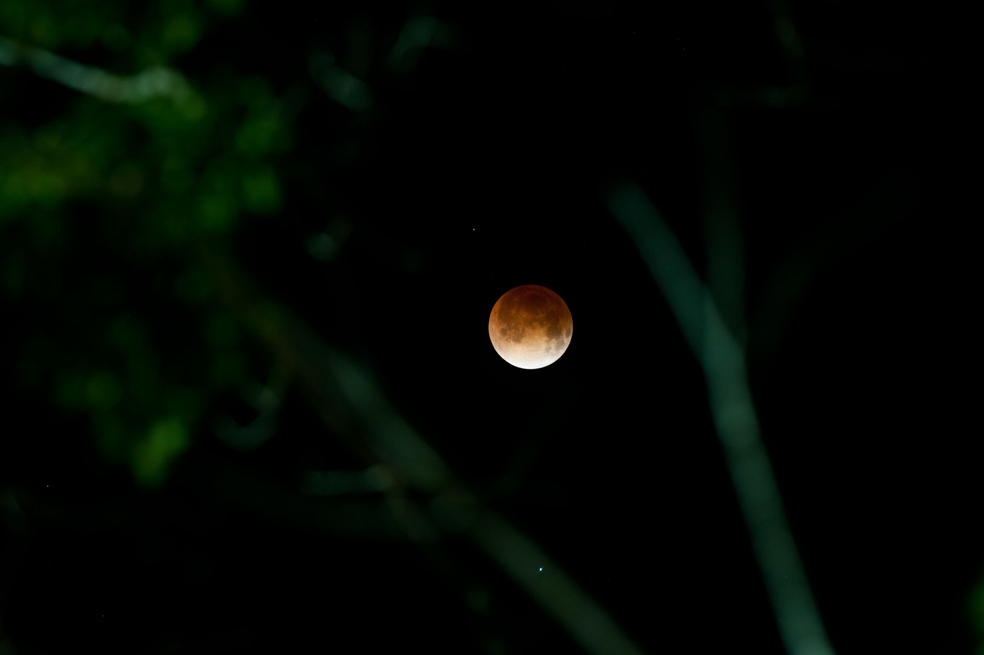
The moon is pictured over San Salvador, El Salvador on April 15, 2014 as a lunar eclipse begins across the Americas. The entire event was to be visible from North and South America, but sky watchers in northern and and eastern Europe, eastern Africa, the Middle East and Central Asia were out of luck, according to US space agency NASA. AFP PHOTO/ Jose CABEZAS
Foto: AFP - JOSE CABEZAS

TOPSHOTS
The moon is halfway through a lunar eclipse over southern California as seen from Korea town, west of downtown Los Angeles early on April 15, 2014. The entire event was to be visible from North and South America, but sky watchers in northern and and eastern Europe, eastern Africa, the Middle East and Central Asia were out of luck, according to NASA. AFP PHOTO/JOE KLAMAR
Foto: AFP - JOE KLAMAR

TOPSHOTS
This picture taken on April 14, 2014 shows the moon over the Independence Monument in Mexico city. On April 15, a total lunar eclipse will occur – and seen throughout North and South America — the first in a series of four eclipses to take place between now and 2015, with an interval of six months between each phenomenon what scientists call "tetrad" – for the first time since December 2011, . The phenomenon will occur again in 2032-2033 and in total will be eight tetrads throughout the XXI century, according to NASA. AFP PHOTO / ALFREDO ESTRELLA
Foto: AFP - ALFREDO ESTRELLA

The blue star Spica (R) is seen next to a lunar eclipse of the moon (L) underway over southern California as seen from Korea town, west of downtown Los Angeles early on April 15, 2014. The entire event was to be visible from North and South America, but sky watchers in northern and and eastern Europe, eastern Africa, the Middle East and Central Asia were out of luck, according to NASA. AFP PHOTO/JOE KLAMAR
Foto: AFP - JOE KLAMAR
Comentarios
Sin comentarios aún. Suscríbete e inicia la conversación