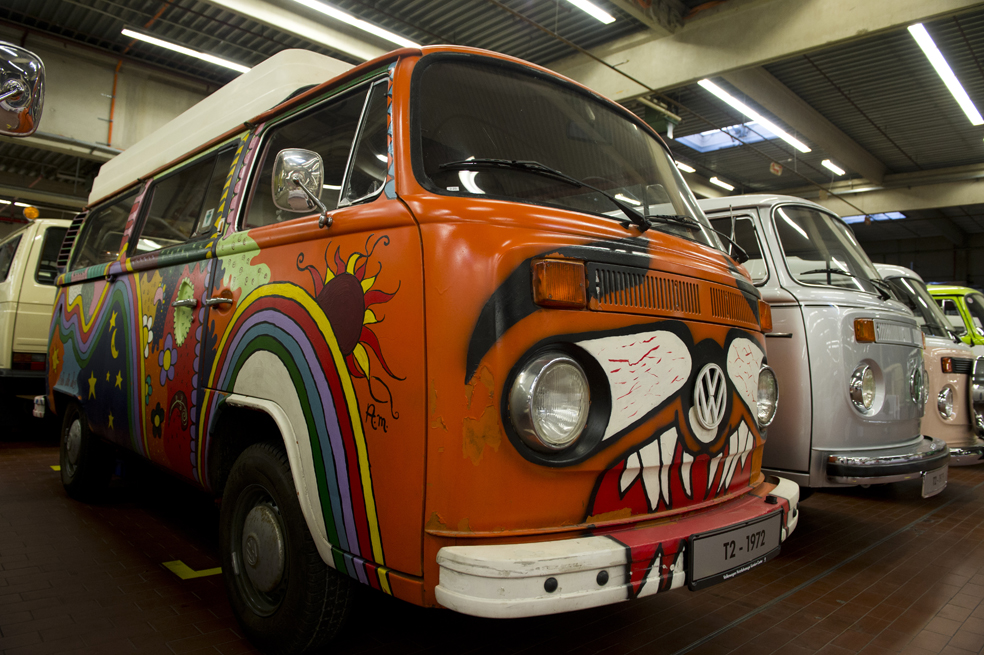
TO GO WITH AFP STORIES ON VOLKSWAGEN'S ICONIC CAMPER VANS = A Volkswagen T2 aka kombi or bulli "Hippie Bus" from 173 is on display at a Volkswagen workshop specialised in restoring vintage T1, T2, T3 and T4 (Transporter) vans, in Hanover, western Germany, on December 9, 2013. The workshop handles vintage vehicles for VW, and private clients alike. A complete makeover of a badly damaged van can cost up to EUR 100.000. The last Kombi factory in the world that produces the T2 is in Brazil, and it will cease production on December 31, 2013, because the introduction of more stringent safety regulations in the country.
AFP PHOTO / JOHN MACDOUGALL
Foto: AFP - JOHN MACDOUGALL
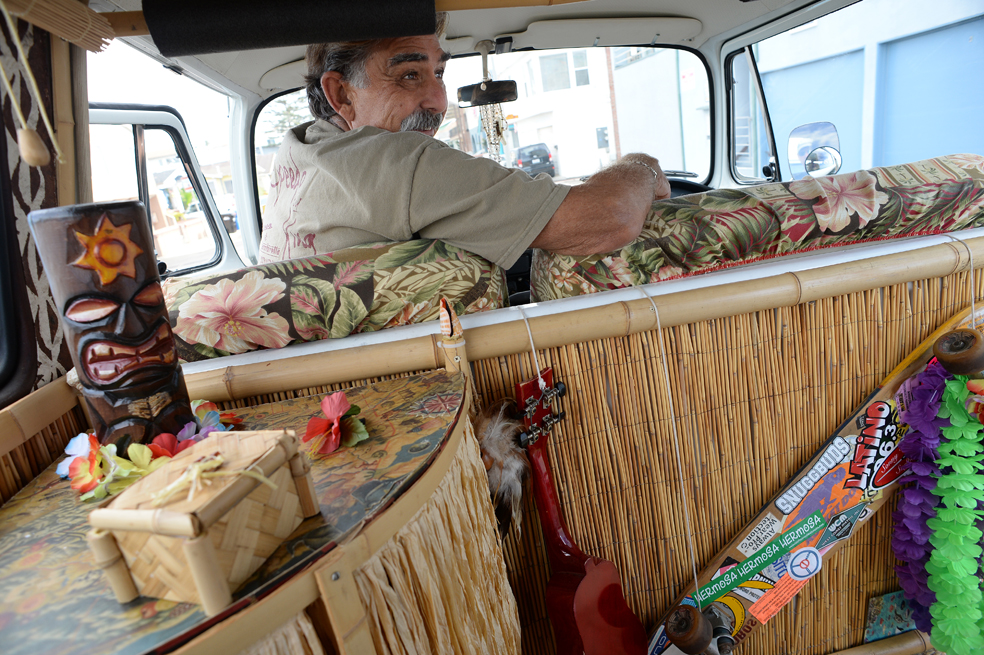
TO GO WITH AFP STORY by Leila MACOR, Lifestyle-US-transport-auto-surf
Frank Paine poses inside his Hawaiian-themed 1974 Volkswagen Kombi in Hermosa Beach, California, on November 27, 2013. Although it entered the US market in the 1950s , it was not until the '60s that the Kombi gained momentum , thanks to the young counterculture then, and particularly of California surfers , the associated independence of thought and the freedom to travel. The last Kombi factory in the world that produces the T2 is in Brazil, and it will cease production on December 31, 2013, because the introduction of more stringent safety regulations in the country. AFP PHOTO / Robyn Beck
Foto: AFP - ROBYN BECK
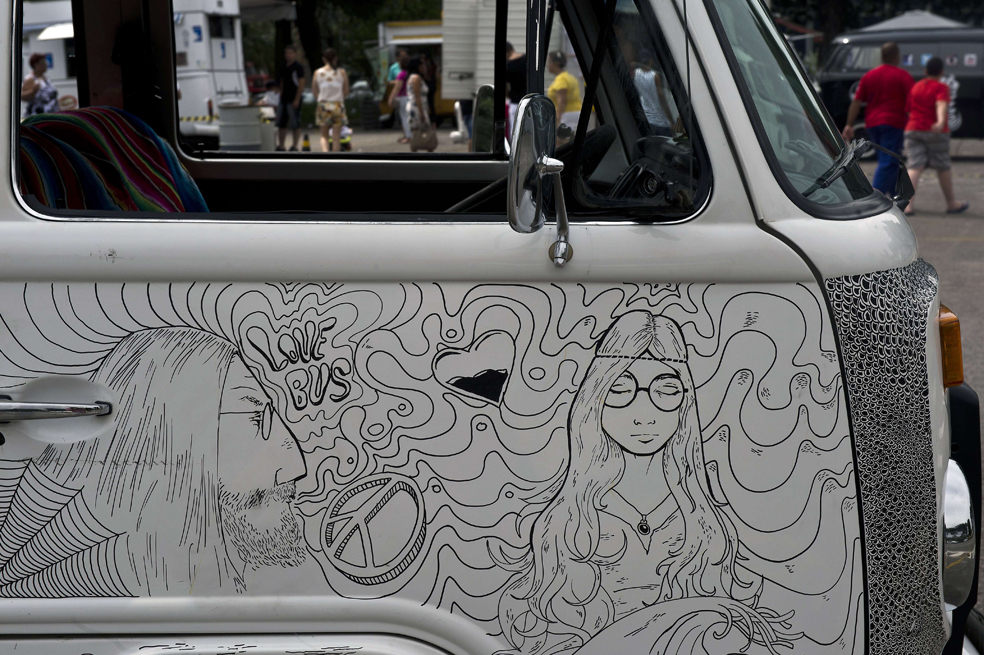
View of a Kombi during an exhibition at the Volkswagen plant in Sao Bernardo do Campo, southern Sao Paulo, Brazil on December 8, 2013. VW's Kombi, or camper van, has meant road trips for generations of families, from surfers to hippies, in search of that perfect wave or trip. But times have changed and in Brazil, the last country in the world still producing the vehicles, new auto laws coming into effect at the start of the new year has meant the last of the iconic vans will roll down the production line on December 31 in the last factory still producing them in Sao Paulo, a victim of auto regulations and requirements like anti-lock brakes and air bags. AFP PHOTO / Nelson ALMEIDA
Foto: AFP - NELSON ALMEIDA
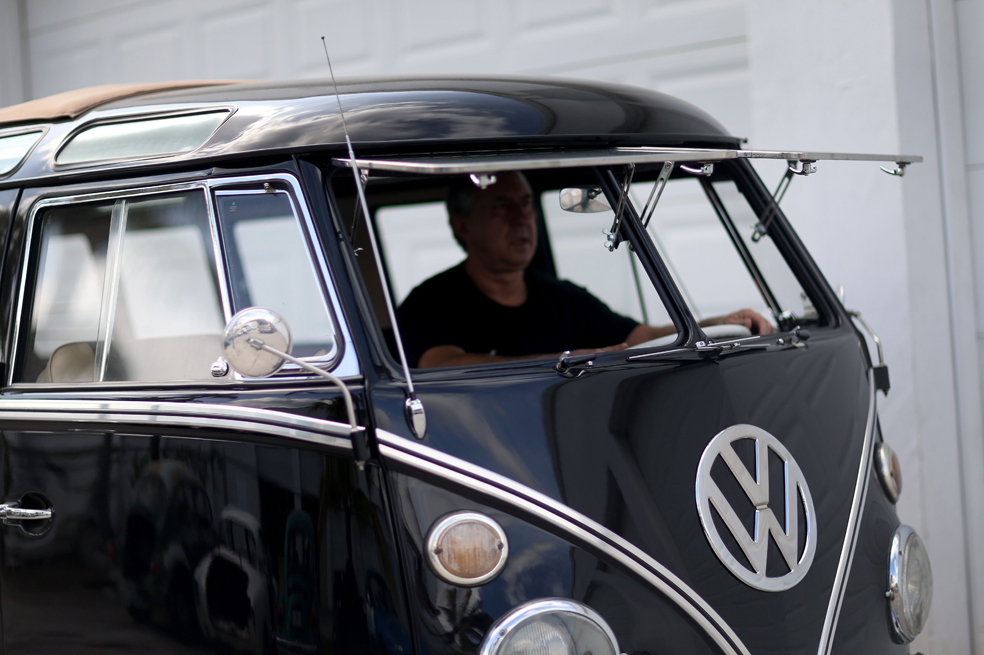
POMPANO BEACH, FL – DECEMBER 12: Bruce Wolczanski drives a 1955 Volkswagen Oval-Window bus in the parking lot at his McNab Foreign Car garage that specializes in restoring VW vehicles on December 12, 2013 in Pompano Beach, Florida. After 64 years, the German automaker announced it will finally stop producing the bus on December 20 in Brazil, the last country in the world to manufacture the van. Mr. Wolczanski said, 'he feels bad that the car will no longer be made, but it will live on as people drag them out of barns, fields and backyards and restore them'. He sees the buses continue to have a cult following with more and more young people buying and restoring the buses, "they will never die". Joe Raedle/Getty Images/AFP== FOR NEWSPAPERS, INTERNET, TELCOS & TELEVISION USE ONLY ==
Foto: AFP - JOE RAEDLE
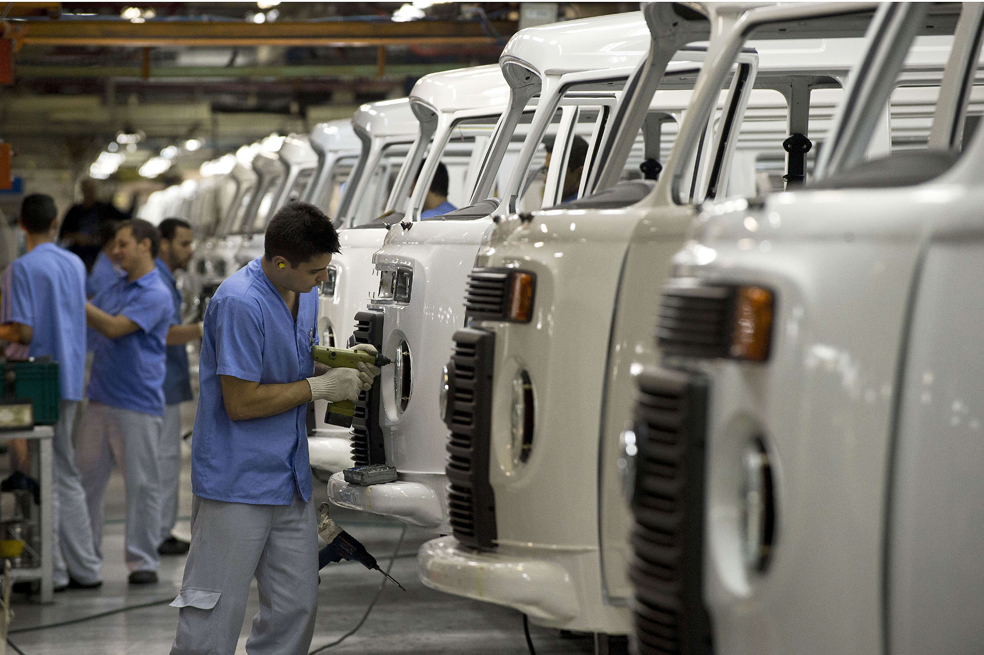
Employees of German carmaker Volkswagen (VW) work on an assembly line of Kombi cars at the company's plant in Sao Bernardo do Campo, southern of Sao Paulo, Brazil on December 9, 2013. With 1,560,000 units produced since 1957 in Brazil, the new auto laws coming into effect at the start of the new year has meant the last of the iconic vans will roll down the production line on December 20 in the last factory still producing them in Sao Bernardo do Campo, a victim of auto regulations and requirements like anti-lock brakes and air bags. AFP PHOTO / NELSON ALMEIDA
Foto: AFP - NELSON ALMEIDA
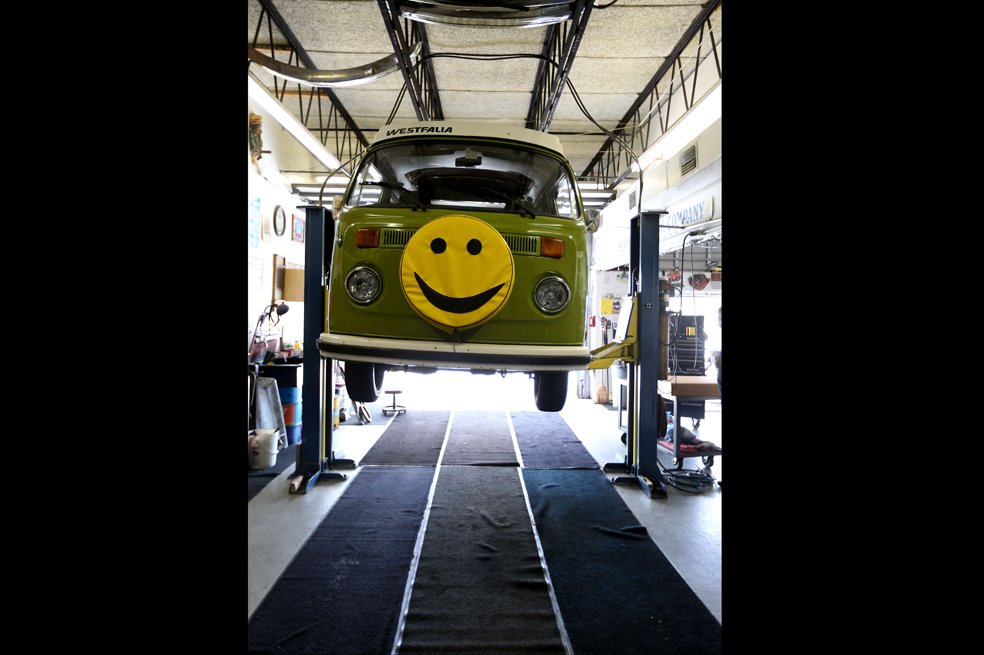
MIAMI, FL – DECEMBER 11: A 1976 Volkswagen camper is seen on the lift at McNab Foreign Car garage that specializes in restoring VW vehicles on December 12, 2013 in Pompano Beach, Florida. After 64 years, the German automaker announced it will finally stop producing the bus on December 20 in Brazil, the last country in the world to manufacture the van. Bruce Wolczansk the owner of McNab Foreign Car said, 'he feels bad that the car will no longer be made, but it will live on as people drag them out of barns, fields and backyards and restore them'. He sees the buses continue to have a cult following with more and more young people buying and restoring the buses, "they will never die". Joe Raedle/Getty Images/AFP== FOR NEWSPAPERS, INTERNET, TELCOS & TELEVISION USE ONLY ==
Foto: AFP - JOE RAEDLE

Different models of Kombis are exhibited at the Volkswagen plant in Sao Bernardo do Campo, southern Sao Paulo, Brazil on December 8, 2013. VW's Kombi, or camper van, has meant road trips for generations of families, from surfers to hippies, in search of that perfect wave or trip. But times have changed and in Brazil, the last country in the world still producing the vehicles, new auto laws coming into effect at the start of the new year has meant the last of the iconic vans will roll down the production line on December 31 in the last factory still producing them in Sao Paulo, a victim of auto regulations and requirements like anti-lock brakes and air bags. AFP PHOTO / Nelson ALMEIDA
Foto: AFP - NELSON ALMEIDA
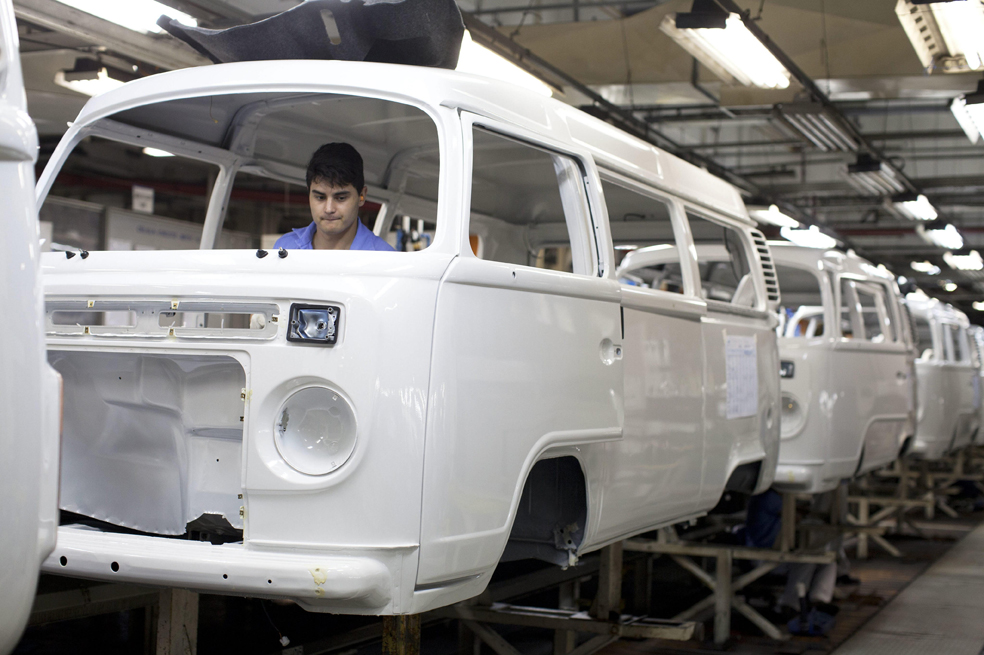
BRA51. SAO PAULO (BRASIL), 09/12/13.- Un empleado revisa una Kombi hoy, lunes 9 de diciembre de 2013, en la línea de producción de la fábrica de Volkswagen en la ciudad de Sao Bernardo do Campo, en la región metropolitana de Sao Paulo. La última Kombi, la mítica furgoneta de Volkswagen, se hará en Brasil el próximo día 20, cuando se termine la fabricación de uno de los símbolos de la marca, que dejará de venderse tras cambios legislativos en el país sudamericano. Entre el 19 y el 20 de diciembre se producirá en Sao Bernardo do Campo, la furgoneta número 1.200 de una edición especial de la generación 2, que se ensambla en Brasil desde 1.957, y que no saldrá a la venta sino que permanecerá en la planta. EFE/SEBASTIÃO MOREIRA
Foto: EFE - Sebastião Moreira
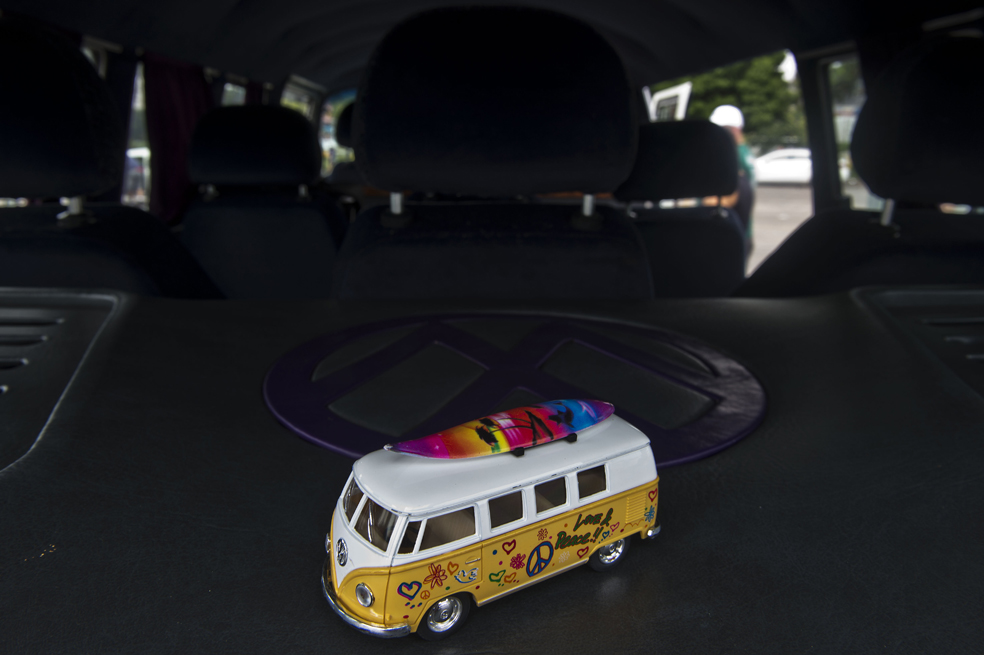
View inside of a Kombi during an exhibition at the Volkswagen plant in Sao Bernardo do Campo, southern Sao Paulo, Brazil on December 8, 2013. VW's Kombi, or camper van, has meant road trips for generations of families, from surfers to hippies, in search of that perfect wave or trip. But times have changed and in Brazil, the last country in the world still producing the vehicles, new auto laws coming into effect at the start of the new year has meant the last of the iconic vans will roll down the production line on December 31 in the last factory still producing them in Sao Paulo, a victim of auto regulations and requirements like anti-lock brakes and air bags. AFP PHOTO / Nelson ALMEIDA
Foto: AFP - NELSON ALMEIDA
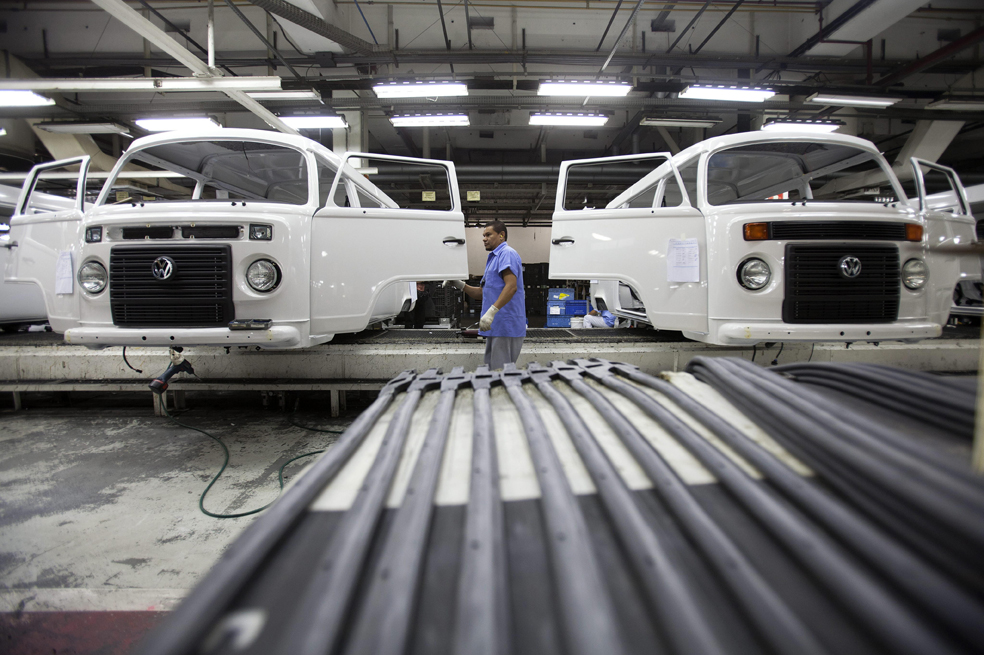
BRA53. SAO PAULO (BRASIL), 09/12/13.- Un empleado revisa una Kombi hoy, lunes 9 de diciembre de 2013, en la línea de producción de la fábrica de Volkswagen en la ciudad de Sao Bernardo do Campo, en la región metropolitana de Sao Paulo. La última Kombi, la mítica furgoneta de Volkswagen, se hará en Brasil el próximo día 20, cuando se termine la fabricación de uno de los símbolos de la marca, que dejará de venderse tras cambios legislativos en el país sudamericano. Entre el 19 y el 20 de diciembre se producirá en Sao Bernardo do Campo, la furgoneta número 1.200 de una edición especial de la generación 2, que se ensambla en Brasil desde 1.957, y que no saldrá a la venta sino que permanecerá en la planta. EFE/SEBASTIÃO MOREIRA
Foto: EFE - Sebastião Moreira
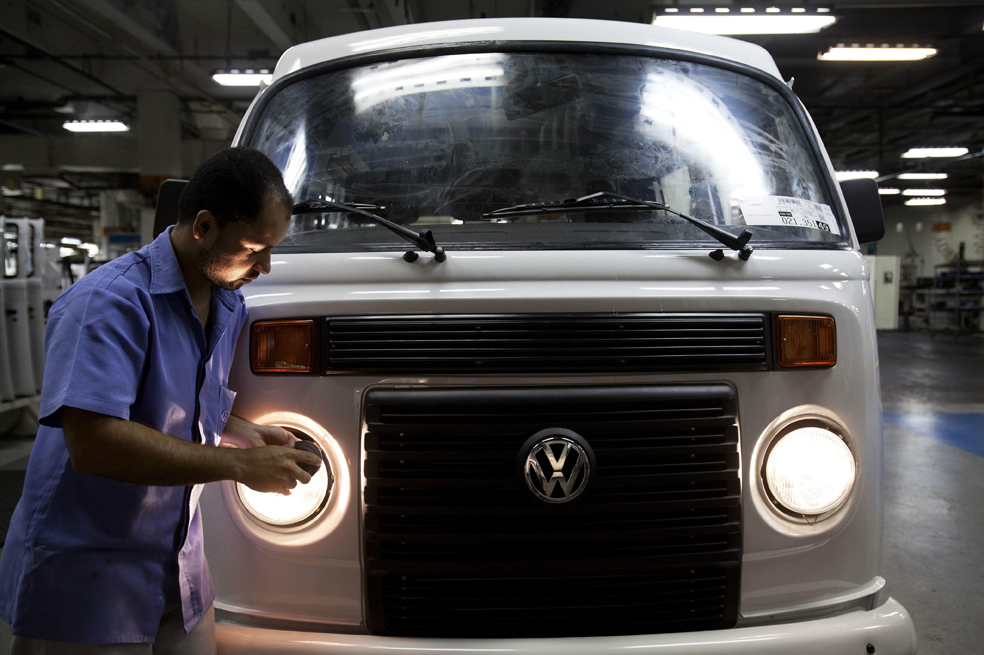
BRA58. SAO PAULO (BRASIL), 09/12/13.- Un empleado revisa una Kombi hoy, lunes 9 de diciembre de 2013, en la línea de producción de la fábrica de Volkswagen en la ciudad de Sao Bernardo do Campo, en la región metropolitana de Sao Paulo. La última Kombi, la mítica furgoneta de Volkswagen, se hará en Brasil el próximo día 20, cuando se termine la fabricación de uno de los símbolos de la marca, que dejará de venderse tras cambios legislativos en el país sudamericano. Entre el 19 y el 20 de diciembre se producirá en Sao Bernardo do Campo, la furgoneta número 1.200 de una edición especial de la generación 2, que se ensambla en Brasil desde 1.957, y que no saldrá a la venta sino que permanecerá en la planta. EFE/SEBASTIÃO MOREIRA
Foto: EFE - Sebastião Moreira
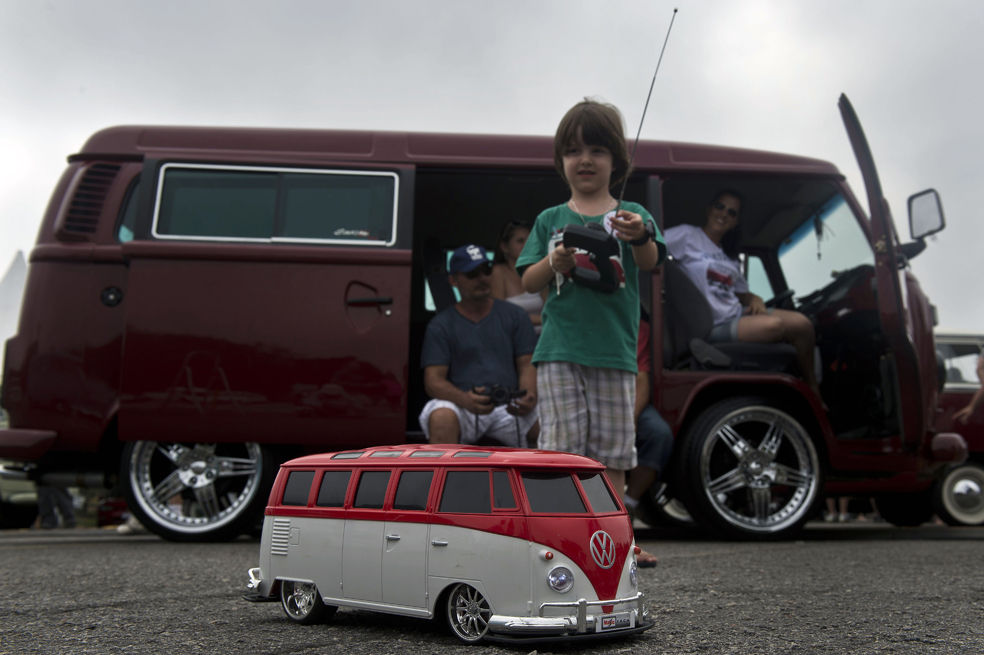
A boy plays with a control remote Kombi during an exhibition at the Volkswagen plant in Sao Bernardo do Campo, southern Sao Paulo, Brazil on December 8, 2013. VW's Kombi, or camper van, has meant road trips for generations of families, from surfers to hippies, in search of that perfect wave or trip. But times have changed and in Brazil, the last country in the world still producing the vehicles, new auto laws coming into effect at the start of the new year has meant the last of the iconic vans will roll down the production line on December 31 in the last factory still producing them in Sao Paulo, a victim of auto regulations and requirements like anti-lock brakes and air bags. AFP PHOTO / Nelson ALMEIDA
Foto: AFP - NELSON ALMEIDA
Comentarios
Sin comentarios aún. Suscríbete e inicia la conversación